
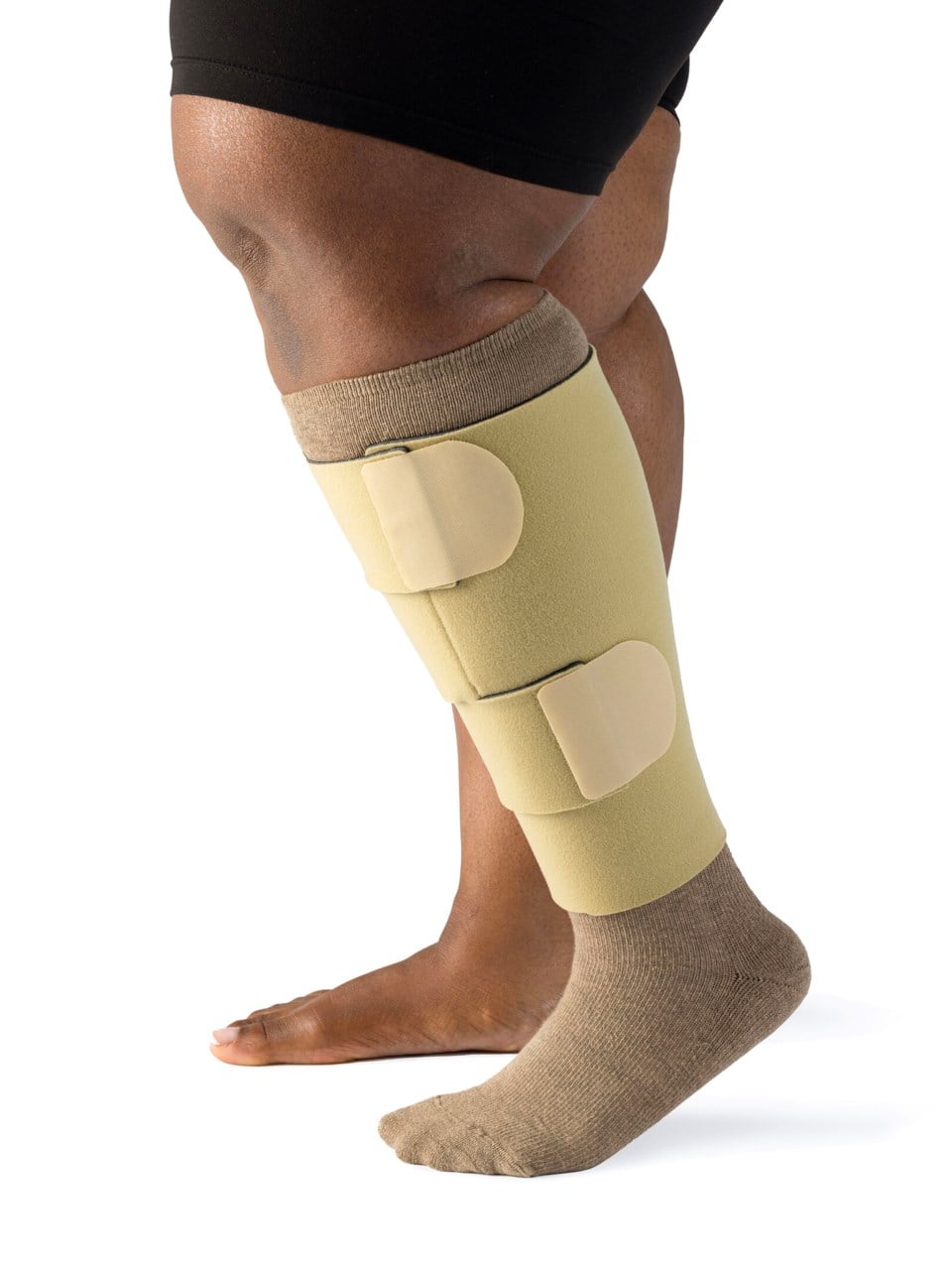
Compreflex Contain Calf
The Compreflex Contain Calf is an inelastic compression device. Paired with the compressive Transition Liner, the Compreflex Contain Calf offers compression to the foot, ankle and calf.
Color
Available compression classes
Available sizes
Where to purchase:
Sigvaris medical-grade compression socks, stockings, and wraps are sold online and in stores. Use the links below to learn more.
Shop SigvarisFind a StoreDetails
- Provides 2X more containment than other Compreflex products to address lower extremity lymphedema
- Features a moderately contoured calf design to fit edematous legs
- 20-50mmHg adjustable, gradient inelastic compression
- Stretch panel holds garment in place for easy application and high compliance
- Transition Liner features an antimicrobial wash for bacteriostatic properties, odor control, and an average of 10-20mmHg compression in the foot and ankle


- Follow the instructions for care on the packaging and/or the textile label.
- Close all hook or other fasteners before washing.
- Wash the product in a mesh laundry bag on a gentle cycle using a mild detergent.
- Do not use bleach or fabric softener.
- Dry the product on low/no heat in a dryer or air dry (air drying is recommended to extend wrap life).
- Store the product at room temperature and in a dry place away from light. Keep away from direct heat.
- Wash liners before first use.
- Edema caused by chronic venous disease (CVD) due to obstruction or valvular insufficiency:treatment and/or prevention
- CVD with venous edema, skin changes,open and closed ulcers
- Lymphedema
- Lipedema
- Edema due to immobilization
- Non-specific edema or edema after surgery
- Advanced peripheral arterial occlusive disease PAOD (ABPI < 0.6, ankle blood pressure < 60 mmHg, toe blood pressure < 30 mmHg, or TcPO2 < 20 mmHg instep)
- Severe cardiac insufficiency (NYHA III–IV)
- Septic phlebitis
- Phlegmasia coerulea dolens
- Compression of an existing arterial bypass (epifascial)
- Relative contraindications that require a particular balancing of benefits and risks:
- Allergy against compression material
- Inflammatory processes (compression products to reduce inflammation, pain or edema in leg erysipelas or cellulitis should only be used in combination with antibacterial treatment)
- PAOD with ABPI between 0.6 and 0.9 and/or ankle pressure between 60 and 90 mmHg
- Skin diseases with massive exudation
- Primary chronic polyarthritis
- Severe sensory disturbances of the extremity
- Advanced peripheral neuropathy (e.g. in diabetes mellitus
- Polyamide: 40%
- Polyurethane foam: 33%
- Polyester: 21%
- Elastane: 6%